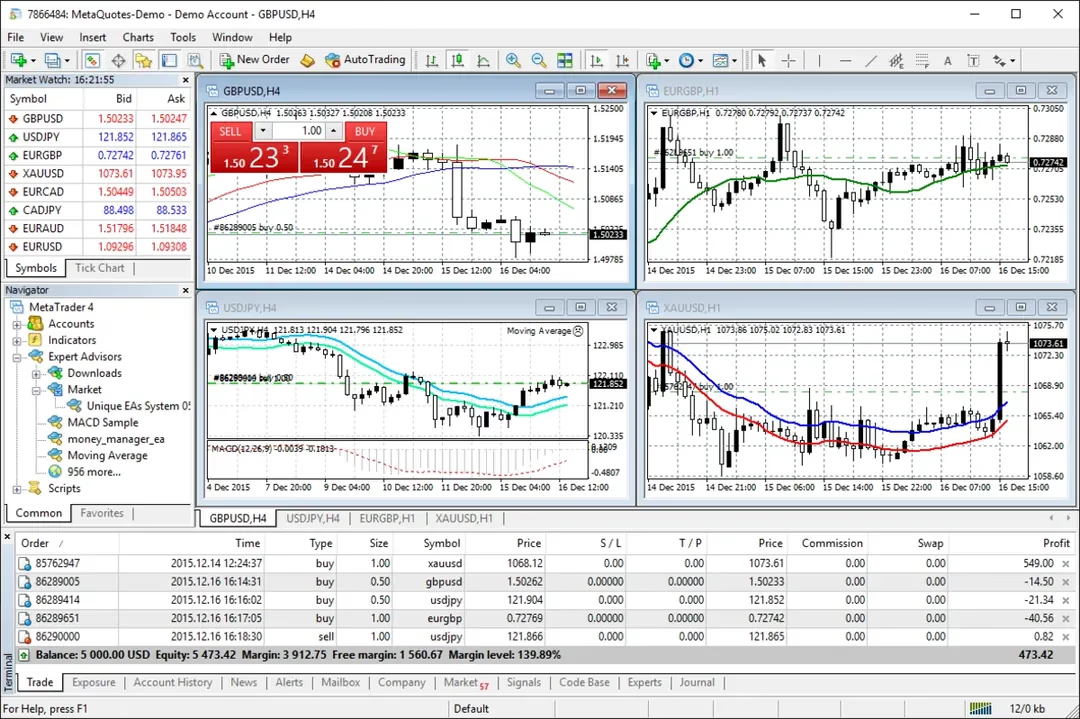
What keeps MT4 relevant after two decades
MetaQuotes stopped issuing new MT4 licences some time ago, steering brokers toward MT5. Still, most retail forex traders haven't moved. The reason is not complicated: MT4 has twenty official source years of muscle memory behind it. A huge library of custom indicators, Expert Advisors, and community scripts were built for MT4. Moving to MT5 means rewriting that entire library, and most traders don't see the point.
I've tested MT4 and MT5 side by side, and the differences are less dramatic than the marketing suggests. MT5 adds a few extras such as more timeframes and a built-in economic calendar, but the charting feels about the same. For most retail strategies, there's no compelling reason to switch.
Setting up MT4 without the usual headaches
Downloading and installing MT4 is the easy part. The part that trips people up is the setup after install. By default, MT4 loads with four charts squeezed onto the screen. Clear the lot and open just the pairs you follow.
Chart templates save time. Configure your usual indicators on one chart, then right-click and save as template. Then you can load it onto other charts in two clicks. Sounds trivial, but over weeks it adds up.
One setting worth changing: go to Tools > Options > Charts and tick "Show ask line." By default MT4 displays the bid price on the chart, which can make your entries look off until you realise the ask price is hidden.
Backtesting on MT4: what the results actually mean
MT4 comes with a backtester that lets you run Expert Advisors against historical data. Worth noting though: the accuracy of those results comes down to your tick data. The default history data from MetaQuotes is not real tick data, meaning it fills in missing ticks mathematically. For anything beyond a rough sanity check, grab third-party tick data.
Modelling quality is more important than the bottom-line PnL. Anything below 90% indicates the results shouldn't be taken seriously. Traders sometimes share screenshots with 25% modelling quality and wonder why live trading looks different.
This is one area where MT4 genuinely outperforms most web-based platforms, but only if you feed it decent data.
MT4 indicators beyond the defaults
MT4 comes with 30 default technical indicators. Most traders never touch them all. That said, the platform's actual strength comes from custom indicators coded in MQL4. There are a massive library, covering everything from basic modifications to elaborate signal panels.
The install process is painless: copy the .ex4 or .mq4 file into the MQL4/Indicators folder, reboot MT4, and the indicator shows up in the Navigator panel. One thing to watch is quality. Publicly shared indicators vary wildly. Some are solid tools. Some stopped working years ago and can freeze your terminal.
If you're downloading custom indicators, check how recently it was maintained and whether other traders report issues. A poorly written indicator doesn't only show wrong data — it can slow down the whole terminal.
Managing risk properly inside MT4
You'll find some risk management features that a lot of people don't bother with. The most useful is maximum deviation in the new order panel. It sets how much slippage is acceptable on market orders. Without this configured and the broker can fill you at whatever price is available.
Stop losses go without saying, but trailing stops is overlooked. Right-click an open trade, pick Trailing Stop, and enter the pip amount. It moves when price moves in your favour. Doesn't work well in choppy markets, but on trending pairs it takes away the temptation to stare at the screen.
None of this is complicated to set up and they take some of the guesswork out of trade management.
Expert Advisors — before you trust a robot with your money
Automated trading through Expert Advisors sounds appealing: define your rules and let the machine execute. The reality is, the majority of Expert Advisors fail to deliver over any decent time period. EAs marketed using perfect backtest curves are often over-optimised — they look great on the specific data they were tested on and stop working when conditions shift.
That doesn't mean all EAs are worthless. Certain traders develop their own EAs to handle specific, narrow tasks: entering at a specific time, calculating lot sizes, or closing trades at set levels. That kind of automation tend to work because they do defined operations without needing judgment.
Before running any EA with real money, run them on a demo account for at least two to three months. Forward testing tells you more than any backtest.
Using MT4 outside Windows
MT4 was built for Windows. Running it on Mac face compromises. Previously was Wine or PlayOnMac, which was functional but introduced rendering issues and occasional crashes. A few brokers now offer Mac-specific builds using Crossover or similar wrappers, which work more smoothly but still aren't true native apps.
MT4 mobile, available for both iPhone and Android, are surprisingly capable for keeping an eye on your account and managing trades on the move. Serious charting work on a 5-inch screen is pushing it, but managing exits while away from your desk has saved plenty of traders.
Look into whether your broker has a proper macOS version or just Wine under the hood — the experience varies a lot between the two.